


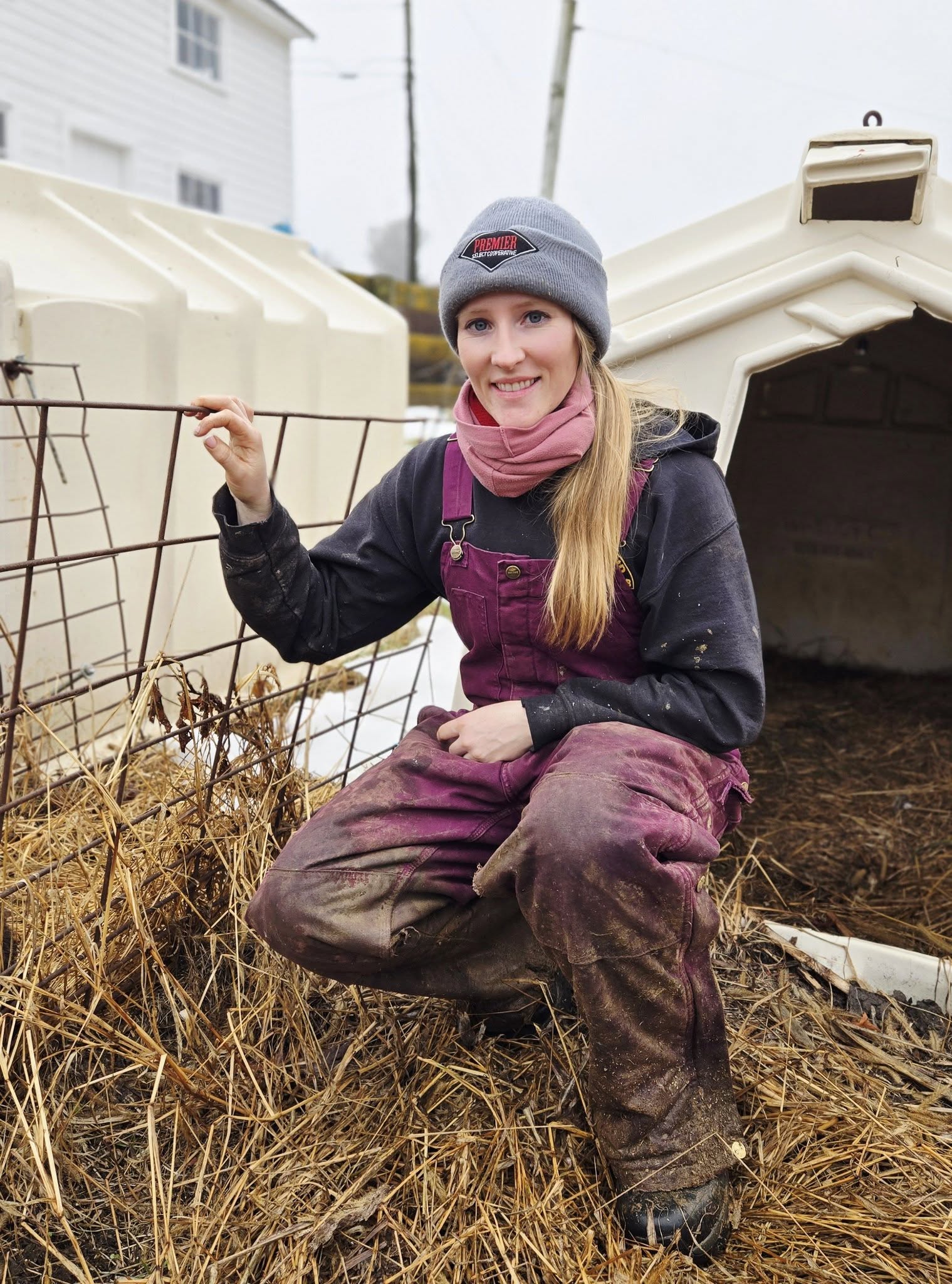
 Haley Wilson’s family started milking cows in Parkton in 1921. A century later, a lawsuit with relatives ended it. She relocated, found 75 acres to rent in Freeland, and has kept the family tradition going.
“The transition had perks and downfalls alike,” Haley says, “but I’m slowly working toward making the space my own.”
At Wilson Dairy Farm, she milks 24 of her own Brown Swiss and Holstein cows, with around 45 head total on the property. The Jersey and Milking Shorthorn breeds belong to neighbors who needed a home, which she handles, too. The hay and pasture ground as well as the as the outbuildings and house are hers to manage.
Day to day, she runs her small farm on her own with occasional help from her dad, who comes for hay season and equipment repairs. And neighbors have shown up when the tractor breaks, when a calf gets sick or when a cow goes down. “I’ve had neighbors helping me since day one, and that is because they understand the struggles of getting started,” she says.
Haley grew up doing this and has always loved the traditional farm life. “I love the daily routine with the animals, seeing the calves grow so fast and how a great heifer can transition into an excellent cow,” she says.
There aren’t a lot of female farmers she knows of who have done what she’s doing. “I feel alone in some of my choices, and that can shake my confidence some days,” Haley says. “I’m excited to show other young women that it is possible to have this life, successfully, if you’re willing to be flexible and have a positive outlook.”
Haley says that the hardest part isn’t physical. It’s the mental tension between her own goals and what the industry tells her to chase. Add tight margins to that plus feed and equipment costs don’t negotiate. “I have multiple sources of income in a month, not because I want extra spending money but because I need them to pay the bills,” she adds.
Most of the milk Haley collects goes to an Amish operation for cheesemaking. A portion also goes to a second Amish outfit that pasteurizes and bottles it. Haley picks up the bottles the next day and sells them out of a small retail store at her farm shed, to a local nonprofit and through a handful of nearby farm stores. The shed also carries Wilson Dairy Farm-grown hay and straw, and eggs sourced from a local farm. Other local makers bring in honey, sourdough and canned goods.
As Haley builds toward the future, she aims to improve her farm and to pay it forward. “My goal is to improve the efficiency of the labor hours and milk output through breeding for improved milk yields and purchasing higher-producing cattle,” she says. “I also hope to grow my youth lease program where children can “work” or “volunteer” year-round in ag education programs.”
Haley proves that the Wilson family’s dairy story didn’t end in Parkton. It found a new home, and its newest chapter is still being written.
Hungry for more? Read about another female farmer. Learn more about cows.