 Winter transforms the landscape at Deere Valley Farm, a 160-acre farm in Dickerson that has been in the Baker family since the 1920s. While the fields of corn, wheat and soybeans rest under a blanket of frost or snow, the farm’s 120 head of Angus-cross cattle adapt to the changing season. But how do these large animals cope with freezing temperatures?
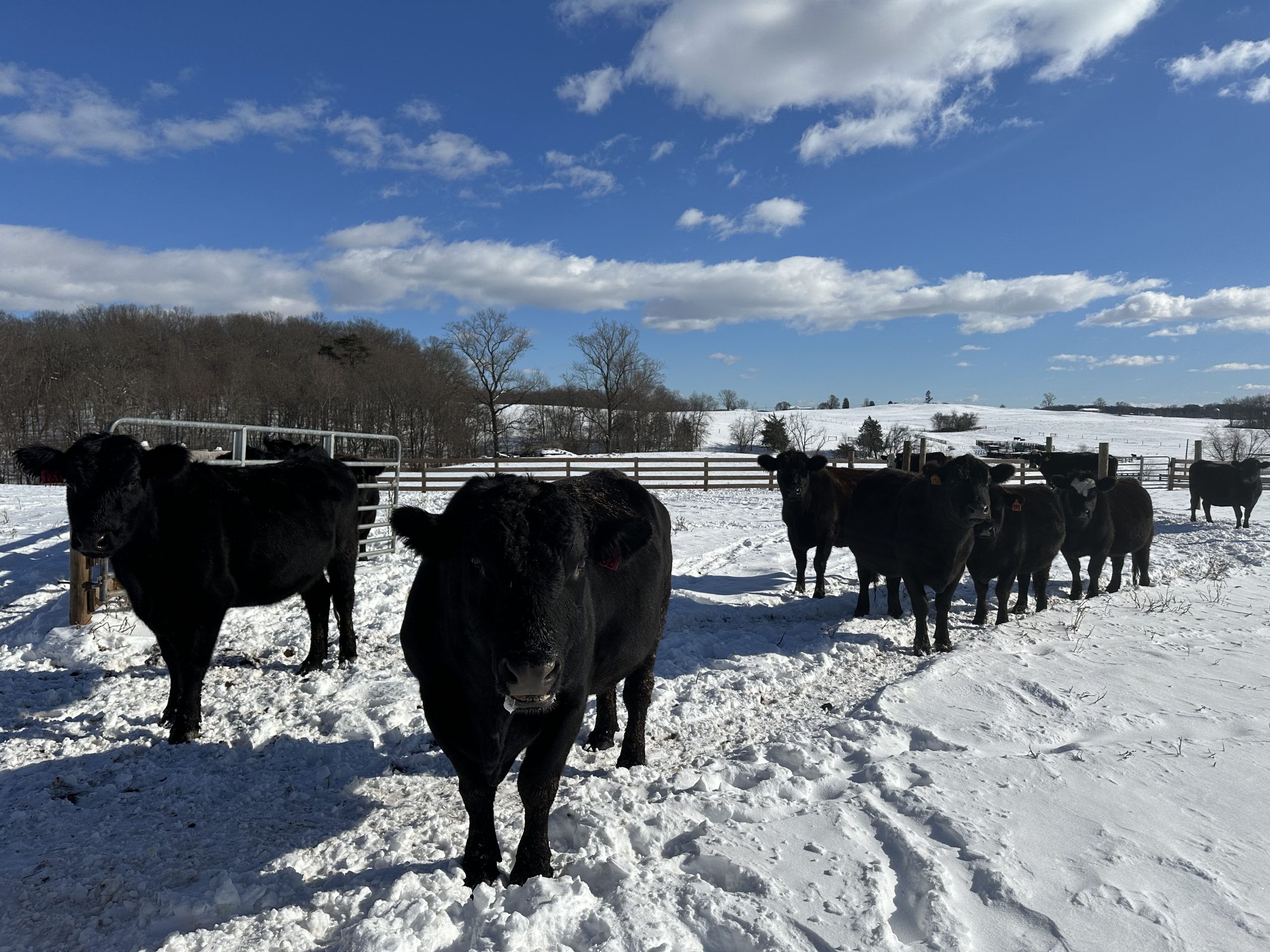
As the temperature drops, so does the availability of fresh pasture grass. This naturally shifts the cattle’s daily routine. Instead of roaming far and wide, they stick closer to resources. “In the wintertime, the cows usually stay close to the feeders and waterers,” says fifth-generation farmer Zack Baker. “They don’t venture as far as they do in other seasons, where they graze farther out in the pasture and return for water when they are thirsty.”
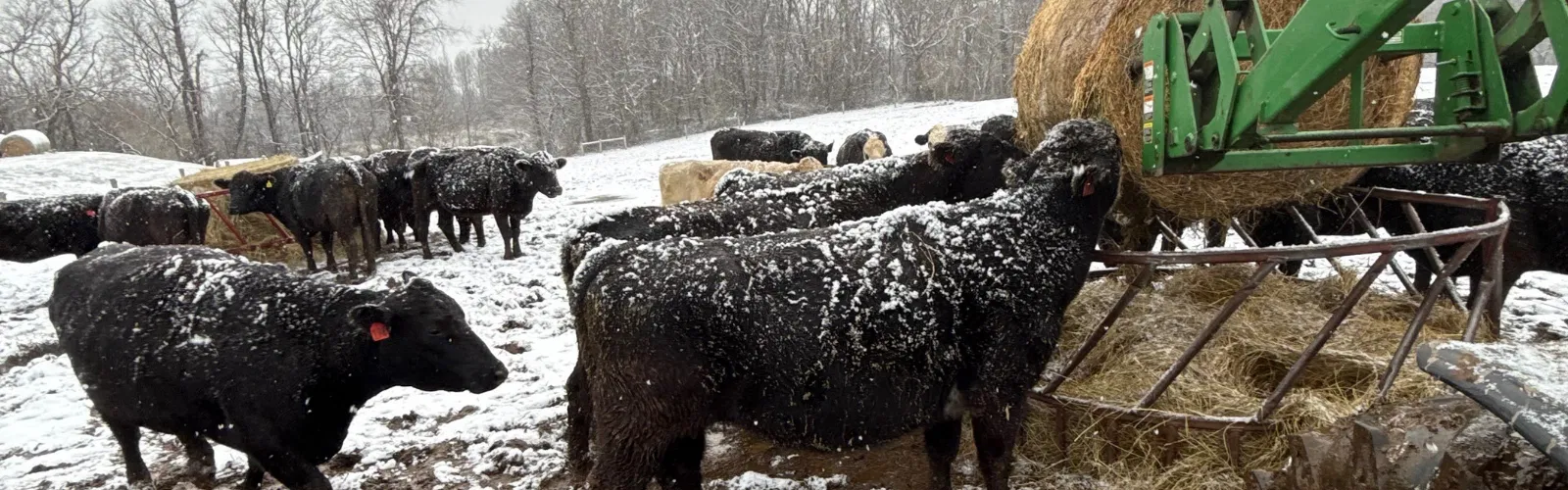
Their diet also undergoes a significant change. To generate the heat needed to stay warm, cows must eat more. While they graze on pasture and receive supplementary dry hay in warmer months, winter calls for a more nutrient-dense meal. The Bakers feed their herd fermented hay, also known as silage. This “wet hay” is made by baling hay, which is grown on the farm, with some moisture and wrapping it airtight, allowing it to ferment. “The cows enjoy this type of hay because, through the fermentation, it gives it a different taste with more nutrients that help to keep them gaining weight and happy,” Zack says.
Fermented feed is especially beneficial for cattle because it aligns closely with how their four-compartment stomach is designed to function. Cattle are not meant to digest starches and sugars directly the way monogastric animals do — they rely on microbial fermentation in the rumen to convert plant material into usable energy. Feeding already-fermented feed enhances that natural process.
Cattle are remarkably well-equipped to handle cold weather. Their digestive system acts like an internal furnace, generating significant heat as they break down food. They also grow a thick winter coat that provides excellent insulation against the elements. You won’t often find them shivering.
They also use behavioral tactics to stay comfortable. “The cows don’t mind being out in the wintertime, but usually stay closer together in bigger groups compared to in the summer,” Zack says. Huddling together creates a natural wind block and shares body heat. While Deere Valley Farm provides wooded areas for shelter, the cattle often prefer the open, finding sunny spots or lying on straw beds spread out for them.
Caring for cattle in winter requires constant care. The biggest health concern is ensuring they maintain a healthy weight. “The biggest challenge I find caring for the cows in the winter is making sure that we pay attention to each cow and their health,” Zack says. “We are constantly checking on them and evaluating how they look and are acting so that we can make the right decision on how to move forward.”
For Zack and his family, raising healthy cattle is a way of life. “We take pride in our cattle. We are blessed to have them and taking care of them is of utmost importance, not just to our business but to our family as they provide for us just as we do them,” Zack says. It’s this partnership between farmer and animal that ensures the herd at Deere Valley Farm remains healthy and productive even during the coldest months of the year.
Hungry for more? Read about another cattle farmer. Learn more about keeping animals healthy.