


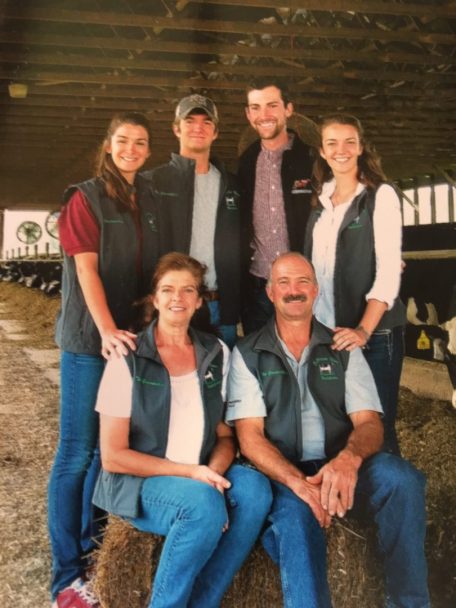

With all of that, though, the 55 acres in the rolling hills of the Catoctin Mountains would look familiar to those first homesteaders. No power lines or cell towers mar the landscape. The steep valley is cut by the swift-flowing, rocky Middle Creek. The fields that follow the contours of the hills are sheltered by a heavy hardwood forest. The house and barn date to the 1840s. The house is made ofsturdy grey creek stone; the barn is the familiar two-story design from the Amish tradition.
The farm remained in the Grossnickle family until 1995, when the relatives who owned the land sold it to a developer. When the developer’s plans changed, he sold it to Patty and Jeff Hurwitz. They are jewelers, not farmers, but wanted to see the farm continue in operation, so they lease the land to the Donnie and Donna, who plant and harvest it.
Like many modern-day farmers, Donnie and Donna must diversify in order to remain solvent. The couple owns and leases a total of 500 acres near Myersville, west of Frederick. Only 146 acres are theirs. The rest are parcels that they rent. They grow a variety of cash crops like wheat, hay, silage, alfalfa, shell corn and soybeans.
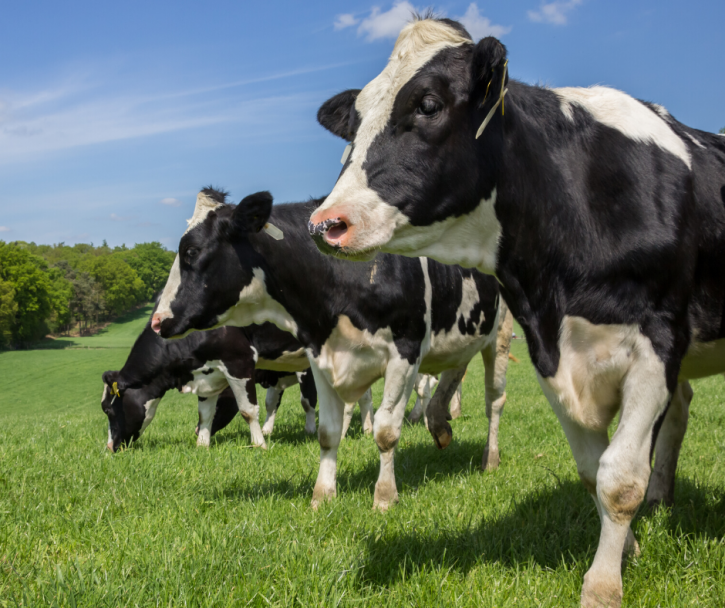
Working with the Hurwitzes, the Grossnickles have developed a way to sustain their dairy farm while also supporting Growing Hope Globally. That’s a charity that develops self-sustaining farming projects in third-world countries. Church groups, businesses and individuals ‘sponsor’ a farm with a per acre donation which is higher than the actual costs of the springtime planting expenses. At the end of the summer, when the farmer sells the harvest, the money from the sale of the crops goes to the charity. Since the profits are higher than the sponsorship the charity recoups the initial donation plus the profits.
The crops that the Grossnickles grow are also the corn and hay they need to feed their dairy herd. At harvest, instead of selling the crop, they ‘purchase’ it themselves, by paying the charity what the crop would sell for at market, just like the arrangement with other farmers. The advantage is that this protects the couple against the unpredictable prices and availability of feed, which is one of the biggest problems facing farmers.
It’s a winning proposition all the ways around. For the Grossnickles, it guarantees that their basic operating costs are covered. For the Hurwitzes, it guarantees that the farm continues as it has for almost 250 years. And for villagers in developing lands, it guarantees that they can become self-sufficient as they start their own farming heritage.
Hungry for more? Sign up for our newsletter and find us on Facebook, Twitter and Instagram.

Golly, this is a wonderful story! Very fair and thorough! And, it features a good-hearted, hard-working farm family as well as their good-hearted, generous landlords, all with a Christian-minded vision to help others on the planet and keep this well-established farm in production!!